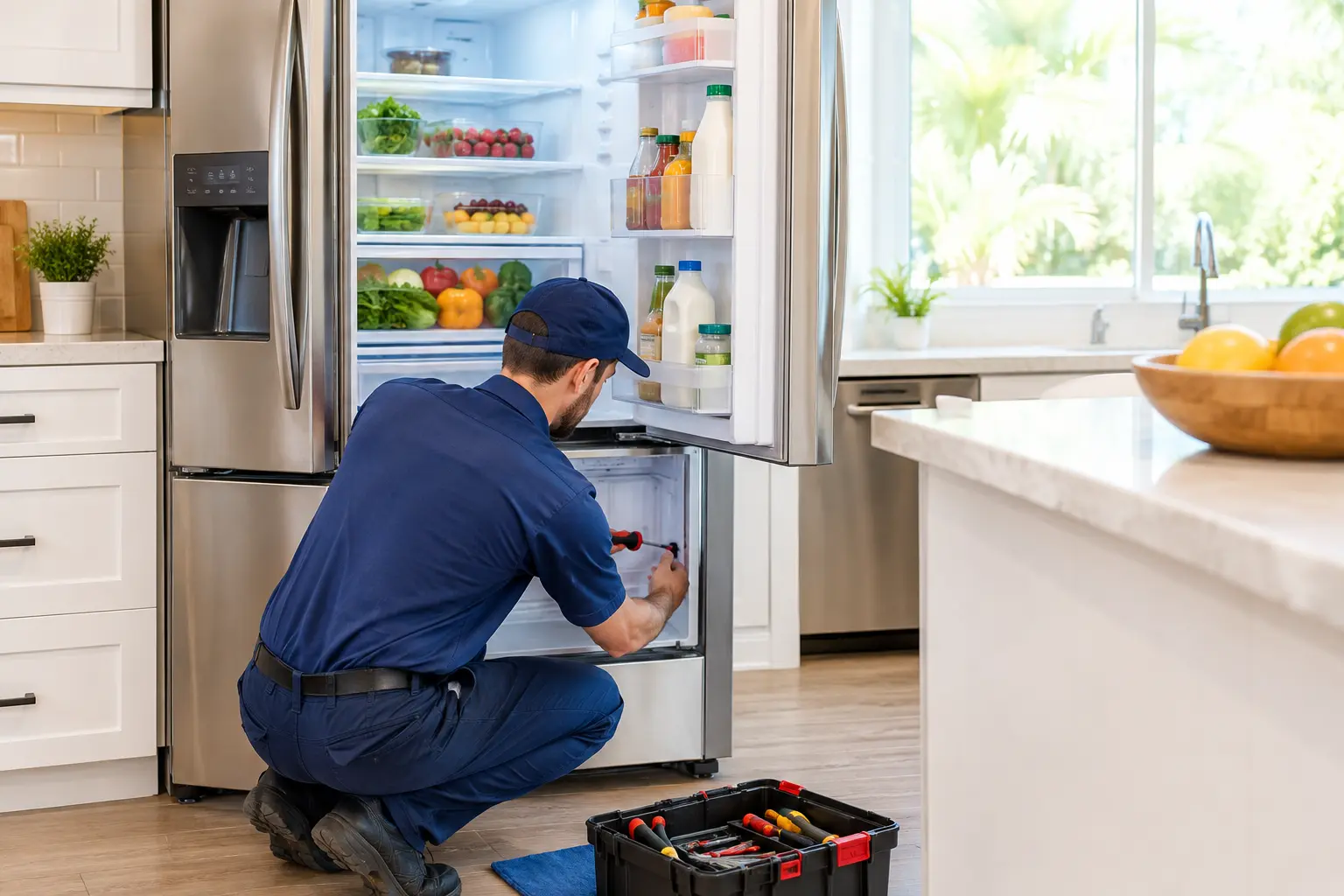
A refrigerator is one of the most important appliances in any home. It keeps groceries fresh, preserves leftovers, and helps families store food safely. However, when a refrigerator starts making unusual noises, leaking water, or struggling to maintain the right temperature, it can quickly become a frustrating problem.
For homeowners in Sarasota, Florida, maintaining a reliable refrigerator is especially important. Understanding common refrigerator issues, recognizing early warning signs, and following simple maintenance practices can help prevent unnecessary breakdowns and keep your kitchen running smoothly.
1. Refrigerator Not Cooling Properly
One of the most common refrigerator problems is inadequate cooling. You may notice that drinks are not cold enough, dairy products spoil quickly, or the freezer is not keeping food frozen.
Several factors can contribute to this issue, including dirty condenser coils, blocked air vents, damaged door seals, or problems with the thermostat or cooling system.
Before assuming that a major component has failed, check that the refrigerator has sufficient ventilation and that food containers are not blocking the internal air vents. Make sure the doors close completely and inspect the seals for visible damage.
If the refrigerator continues to struggle with cooling despite these checks, professional diagnosis may help identify the underlying problem before it becomes more serious.
2. Water Leaking Around the Refrigerator
Finding water on the kitchen floor can be alarming, particularly when the source is unclear. Refrigerator leaks may result from a clogged defrost drain, a damaged water supply line, or an improperly connected water filter.
Start by checking whether the refrigerator is connected to a water dispenser or ice maker. Look for visible moisture around the connections and ensure that the appliance is standing level.
Avoid pulling the refrigerator too far from the wall if doing so could strain its water line or electrical cord. If the leak continues, a qualified technician can inspect the drainage system and water connections.
Addressing leaks promptly can help prevent damage to flooring, cabinets, and nearby kitchen surfaces.
3. Unusual Noises Coming From the Appliance
Refrigerators naturally produce some sounds as the compressor operates, fans circulate air, and ice makers cycle. However, loud buzzing, persistent rattling, grinding, or repeated clicking may indicate a developing problem.
First, check whether the refrigerator is level and whether nearby objects are vibrating against its exterior. You can also listen for changes in the sound when the compressor or fans operate.
If the noise becomes unusually loud or is accompanied by poor cooling, it is worth arranging a professional inspection. Continuing to operate an appliance with a potentially failing component may lead to further complications.
4. Ice Maker or Water Dispenser Not Working
An ice maker that stops producing ice or a water dispenser that delivers little or no water can disrupt everyday kitchen routines.
Possible causes include a blocked water filter, a closed water supply valve, a frozen water line, or a faulty inlet valve. Some models may also stop producing ice when the freezer temperature is too high.
Check the manufacturer’s instructions for replacing the water filter and confirm that the water supply is turned on. If the appliance has recently been installed or moved, verify that the water line has been connected correctly.
If these basic checks do not resolve the issue, a technician can inspect the relevant components and determine whether repair or replacement is necessary.
5. Refrigerator Running Constantly
A refrigerator normally cycles on and off to maintain its target temperature. When it appears to run continuously, several factors may be responsible.
A warm kitchen, frequent door opening, overfilled shelves, dirty condenser coils, or worn door gaskets can make the appliance work harder than necessary. More serious causes may include a malfunctioning thermostat or another cooling-system component.
Begin by checking the door seals, keeping the vents clear, and removing dust from accessible areas according to the manufacturer’s maintenance instructions. Allow adequate space around the appliance for ventilation.
If the refrigerator continues running almost nonstop or your energy consumption appears unusually high, professional assessment can help determine whether a mechanical fault is involved.
6. Simple Maintenance Practices That Make a Difference
Routine maintenance can help reduce avoidable refrigerator problems and support efficient operation.
Clean accessible condenser coils. Dust and pet hair can collect around condenser coils, restricting heat transfer. Follow the manufacturer’s instructions and disconnect power before performing any permitted cleaning.
Inspect door seals regularly. Damaged or dirty gaskets can allow cold air to escape. Clean the seals gently and arrange replacement if they are torn or no longer close properly.
Keep air vents clear. Avoid packing shelves so tightly that cold air cannot circulate throughout the refrigerator.
Monitor the temperature. The U.S. Food and Drug Administration recommends keeping a refrigerator at or below 40°F to help protect stored food. An appliance thermometer can help verify the actual temperature.
Clean spills promptly. Regular cleaning helps maintain a hygienic storage environment and prevents unpleasant odors from developing.
Pay attention to early warning signs. Unusual sounds, recurring leaks, frost buildup, and inconsistent temperatures should not be ignored.
These simple habits can help homeowners identify small issues early and maintain their appliances more effectively.
7. When Should You Call a Refrigerator Repair Professional?
Some refrigerator problems can be addressed through basic maintenance, but others require technical knowledge and specialized tools. Electrical faults, compressor problems, refrigerant leaks, and complicated control-system failures should be handled by a qualified professional.
Consider scheduling an inspection if your refrigerator stops cooling, repeatedly trips a circuit breaker, leaks persistently, or displays error codes that do not clear after the recommended troubleshooting steps.
For households experiencing these problems, professional refrigerator repair in Sarasota can help identify the cause and determine the appropriate repair. Prompt attention may also help prevent additional damage and reduce the risk of losing perishable groceries.
When choosing a repair provider, look for clear communication, transparent pricing, relevant appliance experience, and a willingness to explain the recommended work before repairs begin.
Conclusion
A dependable refrigerator makes everyday life easier, but even well-maintained appliances can develop problems over time. Recognizing warning signs, keeping the appliance clean, maintaining proper temperatures, and addressing unusual behavior promptly can help protect your groceries and avoid unnecessary inconvenience.
Homeowners who need assistance with household appliance issues can explore the services available through Appliance Repair in Sarasota. With regular maintenance and timely professional attention when needed, your refrigerator can continue supporting a safe, comfortable, and efficient kitchen.